The Edge of Reality
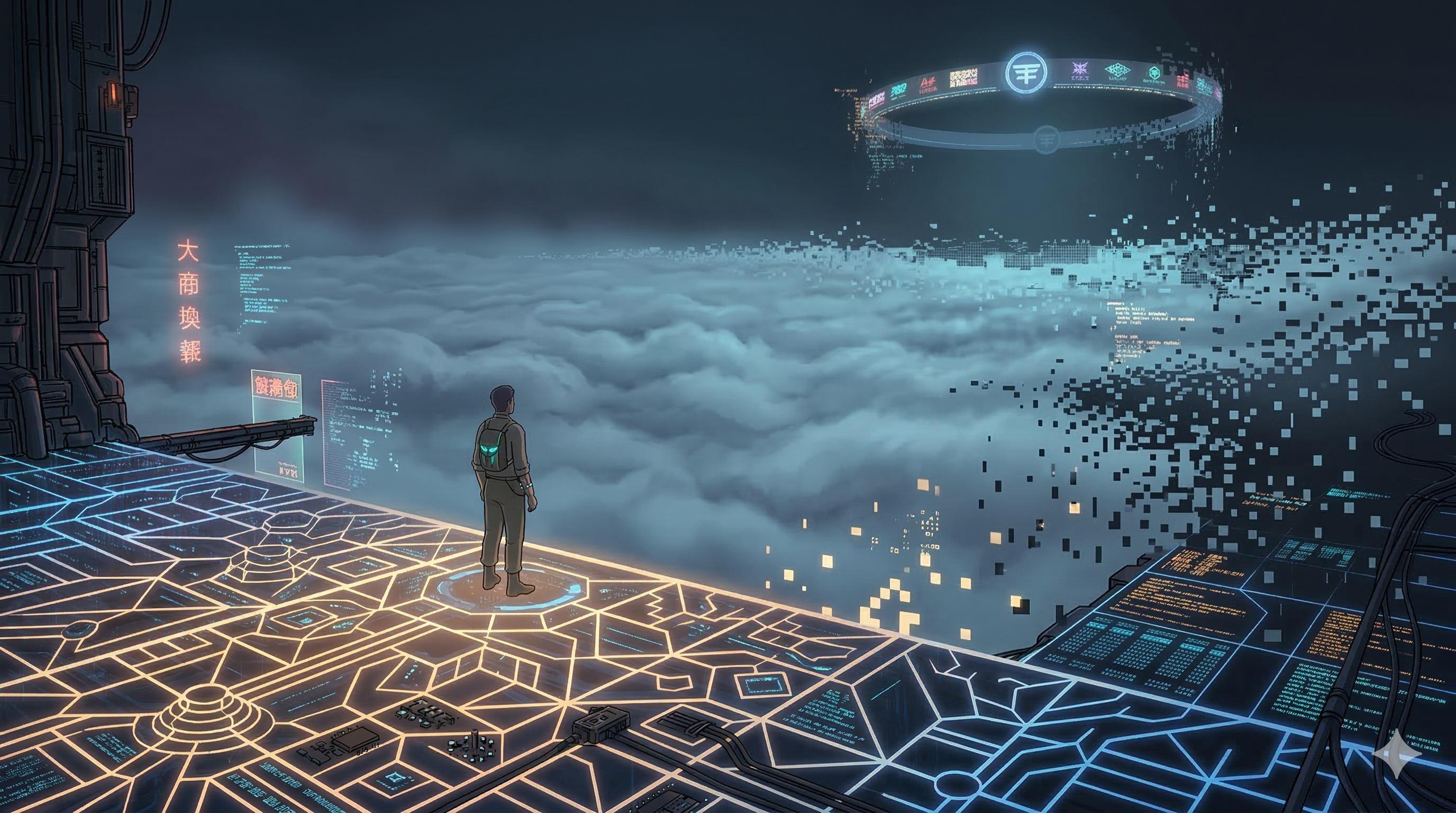
Where explanation fades, curiosity begins.
Introduction
Human beings navigate reality through models.
We build maps of the world in order to move through it: scientific theories, engineering abstractions, mental frameworks, and philosophical systems.
These models allow us to compress overwhelming complexity into something understandable.
Without them, the world would be impossible to navigate.
But models are not reality itself.
They are tools.
And every tool eventually reaches its limit.
Why We Build Models
Reality is far too detailed for the human mind to process directly.
So we compress it.
Maps reduce landscapes to symbols.
Scientific theories reduce phenomena to equations.
Mental models reduce situations to patterns.
This compression allows us to predict, build, and communicate.
But every compression leaves something out.
The model works precisely because it simplifies the territory.
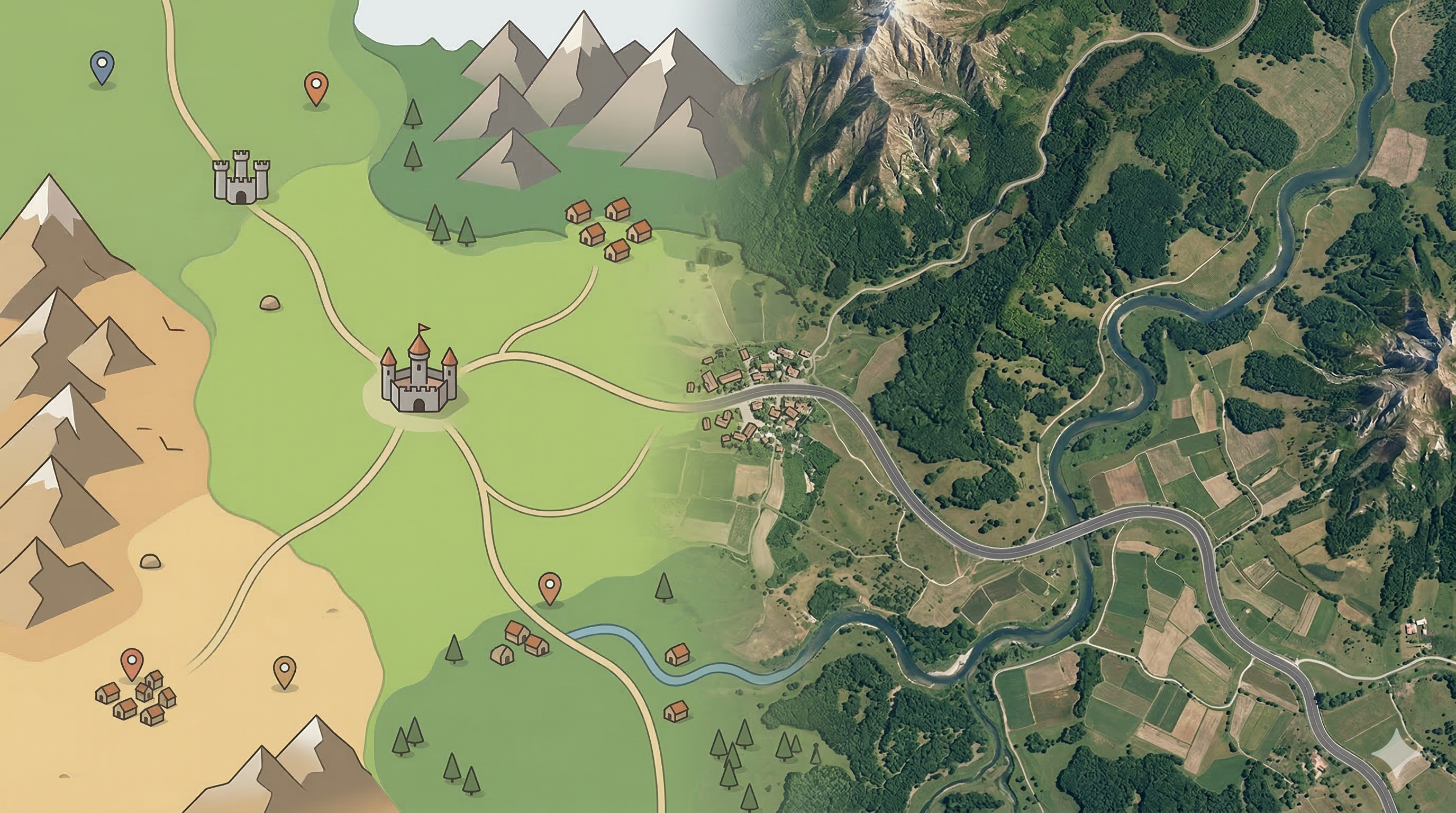
Maps simplify reality so it can be navigated. The territory always contains more detail than the model.
When the Model Meets Its Limit
The tension begins when we forget that the model is a simplification.
When the map is mistaken for the territory, contradictions appear.
Different models can describe the same system and produce conclusions that seem incompatible.
The problem is not always that one model is wrong.
Often the problem is that each model captures a different aspect of a system that is larger than either explanation.
As systems grow more complex, the limits of our frameworks begin to show.
This is where explanation starts to fray.
The Observer Inside the System
There is another complication.
The observer trying to understand reality is not separate from the system being observed.
We are inside it.
Every attempt to model the world is produced by a mind that is itself part of that world.
Which means our explanations are generated from within the very system they attempt to describe.
This creates a subtle recursion.
The observer studies the system while also being one of its components.
Complete detachment is impossible.
Our models are always built from somewhere inside the structure we are trying to understand.
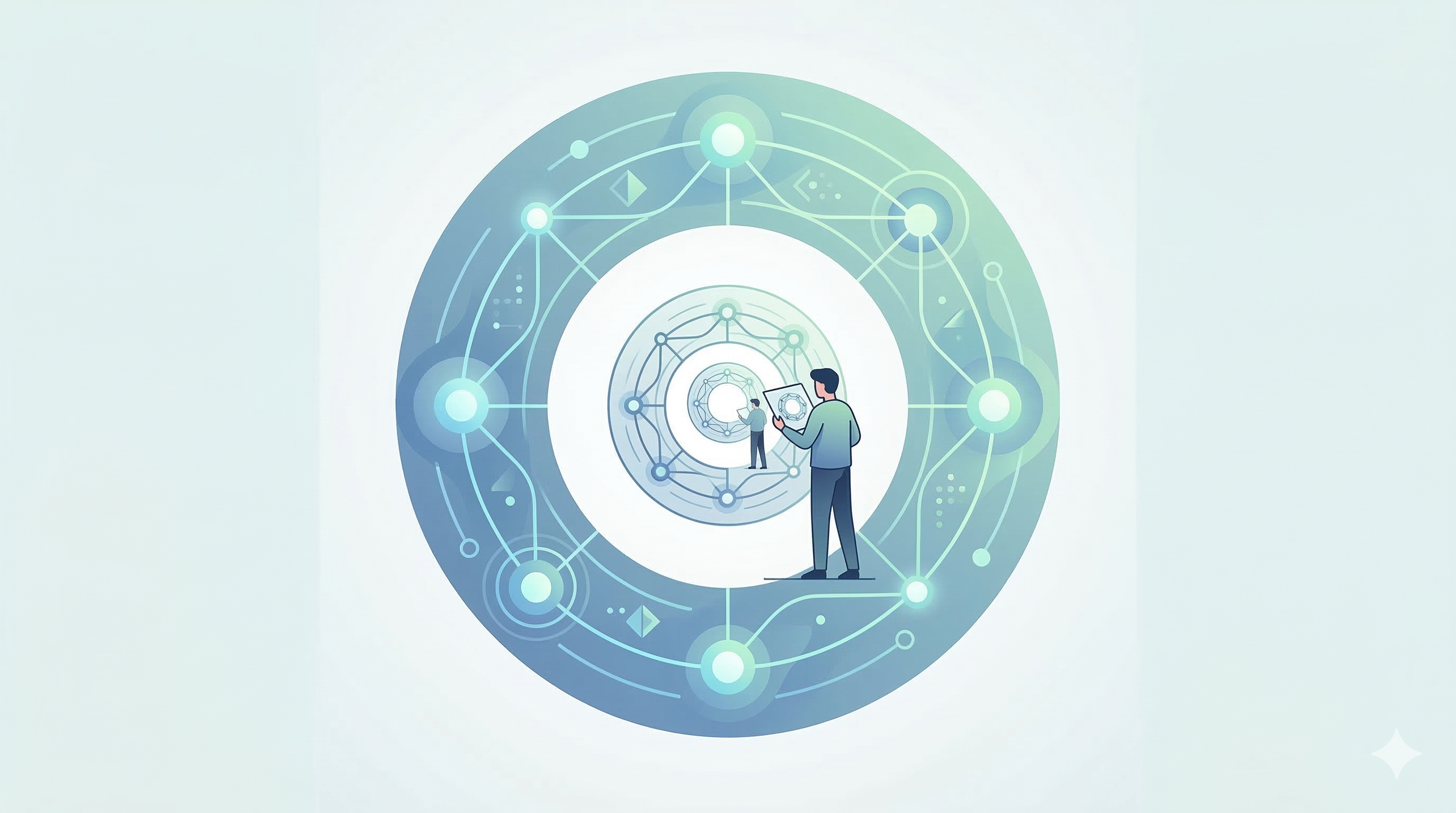
Observers build models of the systems they inhabit. Complete objectivity is difficult because the observer cannot fully step outside the system being described.
The Edge of Explanation
As knowledge grows, something interesting happens.
Our understanding expands outward.
New theories appear.
New models explain more phenomena.
New tools reveal deeper structure.
But every expansion of knowledge also expands the boundary where explanation stops.
At that boundary, questions begin to fold back on themselves.
The system references the observer.
The observer becomes part of the observation.
The models reveal their own limits.
This boundary is what we might call the edge of reality.
Not because reality ends there — but because our explanations do.
The Expanding Frontier
Knowledge does not grow like a completed puzzle.
It grows like a frontier.
Each discovery pushes the boundary outward, but the boundary never disappears.
In fact, the larger the region of understanding becomes, the larger the edge between the known and the unknown becomes as well.
Curiosity expands alongside knowledge.
The horizon moves.

As knowledge expands, the boundary between what we understand and what remains unknown grows with it.
Closing Reflection
It is tempting to believe that with enough progress, reality will eventually be fully explained.
That the map will become complete.
But history suggests something different.
Every generation expands the map, and every generation discovers new edges where explanation becomes uncertain.
This is not a failure of knowledge.
It is a natural consequence of modeling a universe that is larger than any single framework.
The edge of reality is not where understanding ends.
It is where exploration begins.
References
Popper, K. (1959). The Logic of Scientific Discovery. Routledge.
Kuhn, T. S. (1962). The Structure of Scientific Revolutions. University of Chicago Press.
Friston, K. (2010). The free-energy principle: a unified brain theory? Nature Reviews Neuroscience, 11(2), 127–138.
Clark, A. (2013). Whatever next? Predictive brains, situated agents, and the future of cognitive science. Behavioral and Brain Sciences, 36(3), 181–204.
Jaynes, E. T. (2003). Probability Theory: The Logic of Science. Cambridge University Press.