Cognitive Work Has Recovery Limits
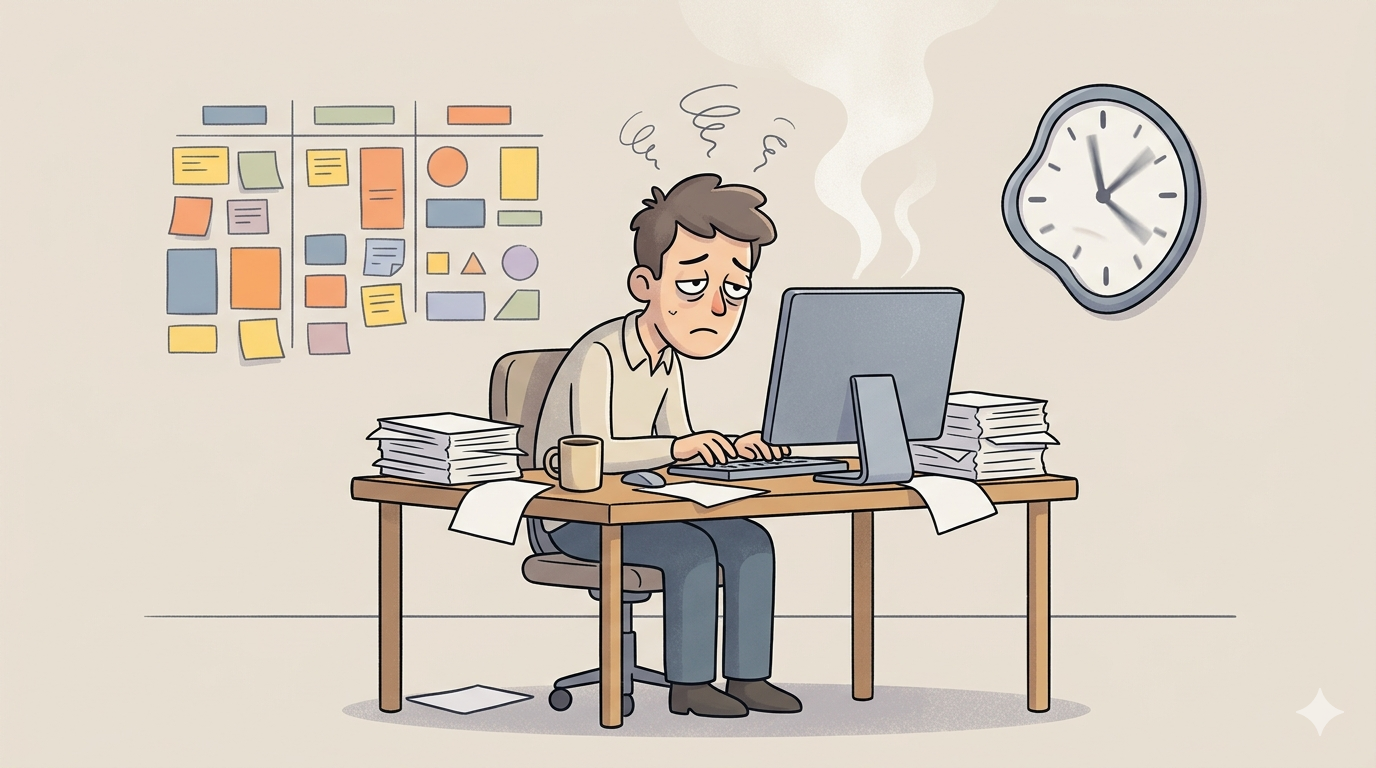
Cognitive work draws from finite biological energy. Without recovery, systems don’t return to baseline—they accumulate strain over time.
Why high-cognitive professions quietly exceed human recovery capacity.
Modern knowledge work often assumes that thinking is frictionless.
You sit down, you focus, you produce. If something goes wrong, the assumption is usually that something is wrong with your discipline, your motivation, or your ability to concentrate.
But sustained cognitive effort is not free.
It is biological work.
Cognitive Work Is Biological Work
The brain is one of the most energy-intensive systems in the body.
Even at rest, it consumes a disproportionate amount of metabolic energy. When engaged in sustained reasoning—debugging, designing systems, holding multiple abstractions in working memory—that demand increases.
Cognitive effort draws from finite resources: - energy
availability
- attention capacity
- emotional regulation
- stress tolerance
Over time, these systems fatigue.
This fatigue is not a lack of willpower. It is a biological constraint.
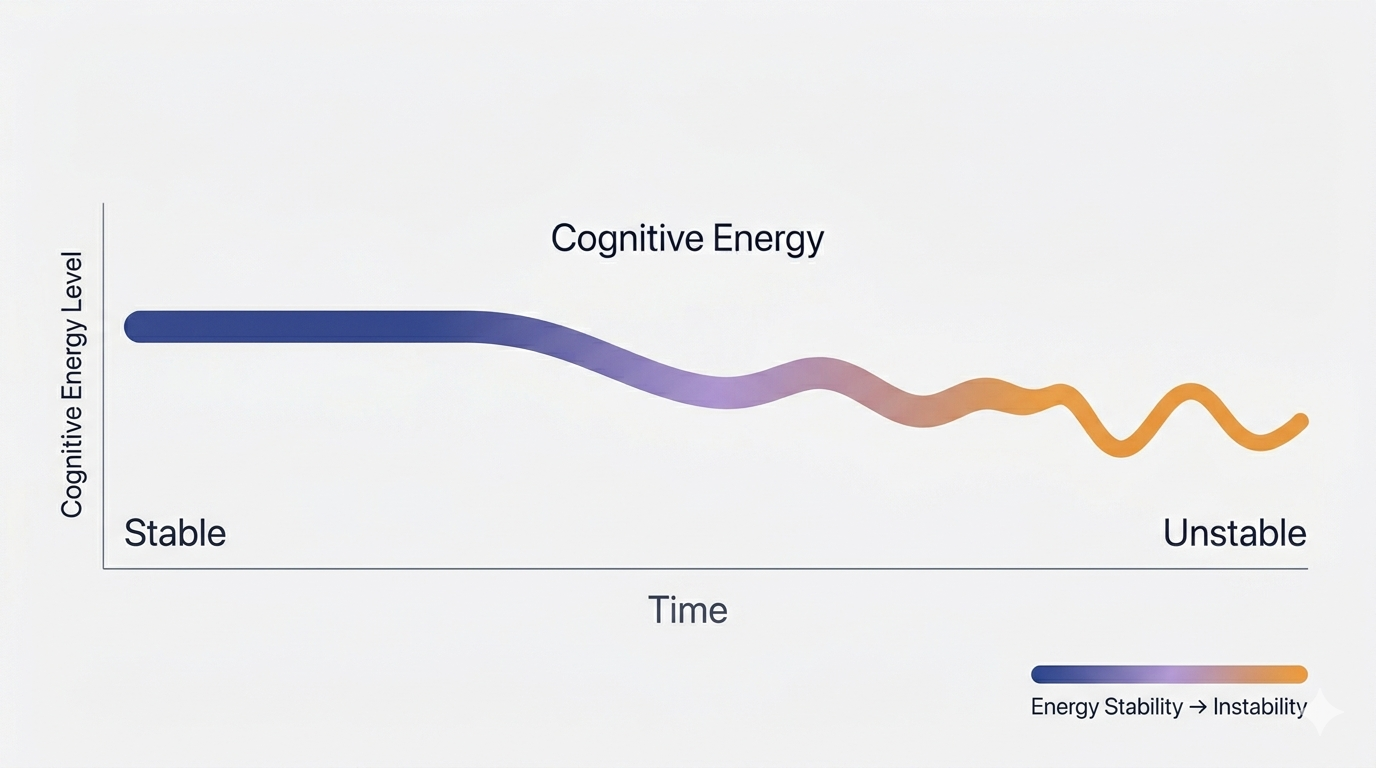
Figure 1: Cognitive energy is consumed during effort and restored through recovery.
Engineering Concentrates Cognitive Load
Not all work distributes effort the same way.
Some forms of labor blend physical movement, interaction, and variation. Engineering, by contrast, concentrates effort into sustained abstract reasoning:
- long periods of deep focus
- complex system simulation in the mind
- debugging invisible states
- maintaining multiple layers of context
The work is quiet, but the demand is intense.
Over time, the system accumulates strain.
The Missing Recovery Loops
All systems that sustain output require recovery loops.
In human terms, these include: - sleep
- mental disengagement
- physical movement
- emotional processing
- shifts in attention
When these loops are present, cognitive systems remain stable.
Load increases, recovery follows, and the system returns to baseline.
When recovery is missing, the system behaves differently.
Load no longer resets. It accumulates.
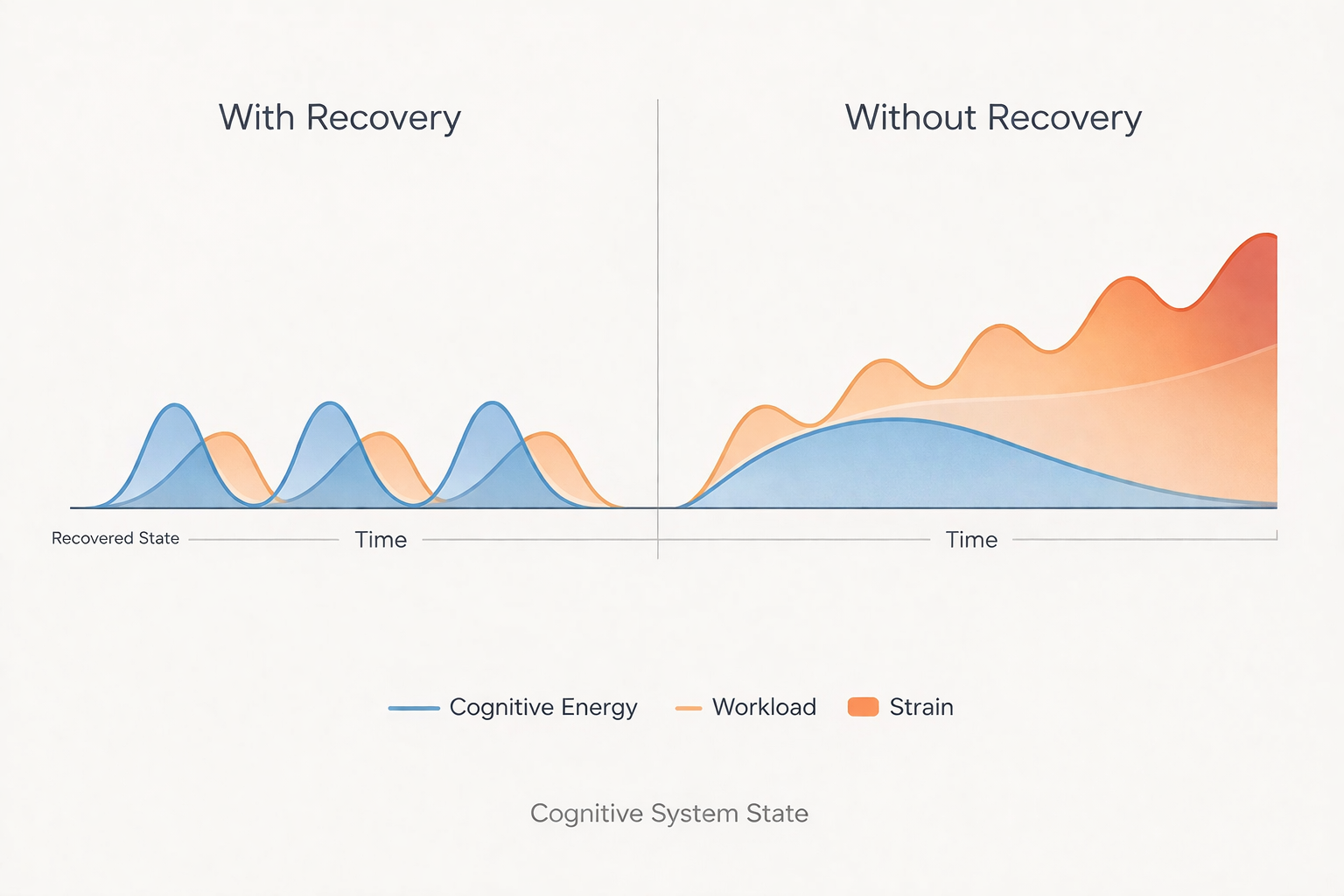
Figure 2: With recovery, cognitive load returns to baseline. Without recovery, it accumulates over time—even when workload remains similar.
At first, this accumulation is subtle.
Then it becomes noticeable: - slower thinking
- reduced clarity
- increased friction
Eventually, it becomes destabilizing.
When Overload Is Misread
One of the most difficult aspects of cognitive overload is how it appears.
From the inside, it can feel like a collapse: - thoughts become
harder to hold
- reasoning becomes fragmented
- simple problems feel inaccessible
From the outside, it often looks like something else: - lack of
motivation
- inconsistency
- underperformance
This creates a dangerous misinterpretation.
Instead of recognizing overload, the system applies more pressure.
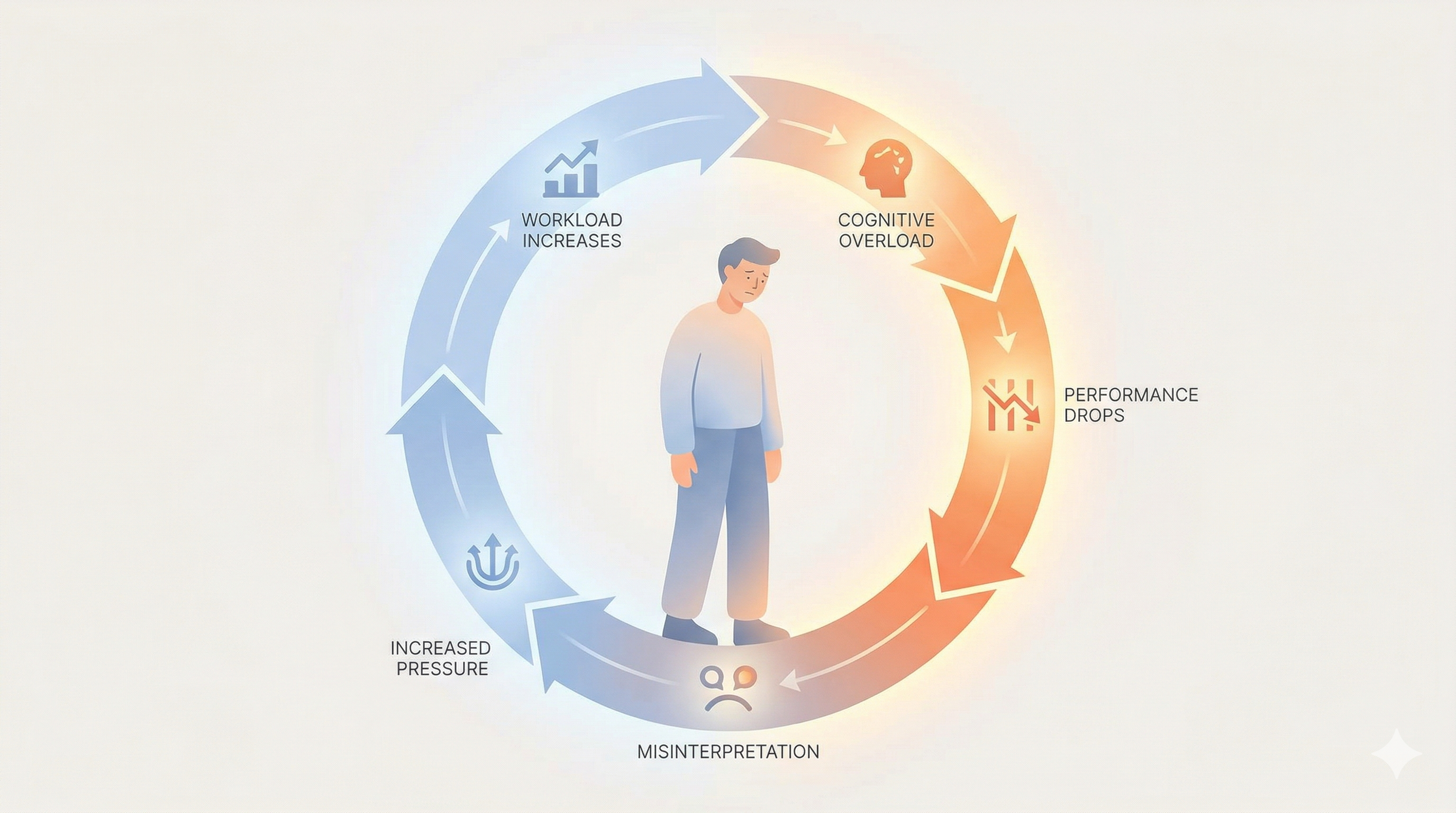
Figure 3: When overload is misinterpreted as underperformance, systems reinforce the problem instead of correcting it.
The result is a reinforcing loop:
more demand → more overload → worse performance → more pressure
The system does not correct itself.
It amplifies the failure.
Awareness as the First Recovery Mechanism
The first step is not optimization.
It is recognition.
Cognitive work has limits.
Recovery is not optional. It is structural.
Understanding this changes the framing:
- from “why can’t I keep up?”
- to “what is the system doing under load?”
This shift allows for: - more sustainable pacing
- better system design
- more accurate interpretation of performance
The goal is not to eliminate effort.
It is to align effort with recovery.
Because in cognitive systems, energy is not free.
It is borrowed—and it must be repaid.
References
Arnsten, A. F. T. (2009).
Stress signalling pathways that impair prefrontal cortex structure and
function.
Nature Reviews Neuroscience.
https://doi.org/10.1038/nrn2648
Boksem, M. A. S., & Tops, M. (2008).
Mental fatigue: Costs and benefits.
Brain Research Reviews.
https://doi.org/10.1016/j.brainresrev.2008.07.001
Maslach, C., & Leiter, M. P. (2016).
Understanding the burnout experience: Recent research and its
implications for psychiatry.
World Psychiatry.
https://doi.org/10.1002/wps.20311
Raichle, M. E., & Gusnard, D. A. (2002).
Appraising the brain’s energy budget.
Proceedings of the National Academy of Sciences.
https://doi.org/10.1073/pnas.172399499
Sweller, J. (1988).
Cognitive load during problem solving: Effects on learning.
Cognitive Science.
https://doi.org/10.1207/s15516709cog1202_4
Newport, C. (2016).
Deep Work: Rules for Focused Success in a Distracted
World.
Grand Central Publishing.